NEIEA combines two things: a blended classroom that lets one excellent teacher reach many rooms at once, and a way of teaching that makes learners think instead of memorise.
Start Here
Our Method, in Plain Words
Children learn by thinking and talking, not by memorising. Every NEIEA lesson, in every subject, flows through the same four steps. Follow one lesson from top to bottom: what the mentor teacher, the learners and the classroom coordinator do at each step, and what it builds in the child.
Before the Lesson
Everything Ready, Every Child Counted
Academic Team: lesson plan and worksheet built around discussion
Coordinator: switches on the screen and mic, seats children in groups, marks attendance
First Lesson of a Course: an initial assessment shows where each child starts
1
Step 1 · AskDOP: Interaction
Start With a Real Question
Every child starts thinking about the same idea before any rule is taught.
Mentor TeacherOn screen, live
Live on screen in every classroom at once, shows a picture, a short story or a real situation and asks open questions: What do you see? Why did it happen?
LearnersIn groups
Think first, then answer in their own words, in any language they are comfortable in. No answer is wrong yet.
CoordinatorSupervises
Keeps the room quiet and makes sure every child can see and hear the screen.
2
Step 2 · TalkDOP: Try, Then Share
Talk It Through Together
Ideas and new words come from the children themselves, not from the textbook.
Mentor TeacherOn screen, live
Puts learners in pairs and groups with one clear task, then calls on each classroom in turn and asks follow-up questions.
LearnersIn groups
Try it alone first, then share with a partner and their group: agree, disagree and explain why.
CoordinatorSupervises
Keeps groups on task and maintains discipline while children talk.
3
Step 3 · MakeDOP: Create & Present
Create Something New
Children use the idea to produce real work: writing, a solution, a poster or a talk.
Mentor TeacherOn screen, live
Sets a creative task (a story, letter, dialogue, poster or solution) and shows what a good one looks like.
LearnersIn groups
Write, solve or build it together, then present their group's work to every classroom on the screen.
CoordinatorSupervises
Hands out worksheets and holds group work up to the camera when the mentor asks.
4
Step 4 · ReflectDOP: Refine
Look Back and Improve
The concept becomes clear, and every child knows how to make their work better.
Mentor TeacherOn screen, live
Compares the groups' work, praises what works and points out the grammar, method or concept behind it.
LearnersIn groups
Edit and improve their own work, then say what they learned and what they will do differently.
CoordinatorSupervises
Keeps order, collects the work and reports absences.
After the Lesson
Followed Up, Measured, Built On
Mentor Teacher: grades the work and plans the next lesson from what children made
NEIEA Office: calls families when a child stops coming
Every Few Weeks: periodic assessments; a final assessment and certificate at the end
Then the Cycle Repeats. The next lesson starts again with a question, building on what children made today.
1 · The blended classroom
One Mentor, Many Classrooms, the Same Live Lesson
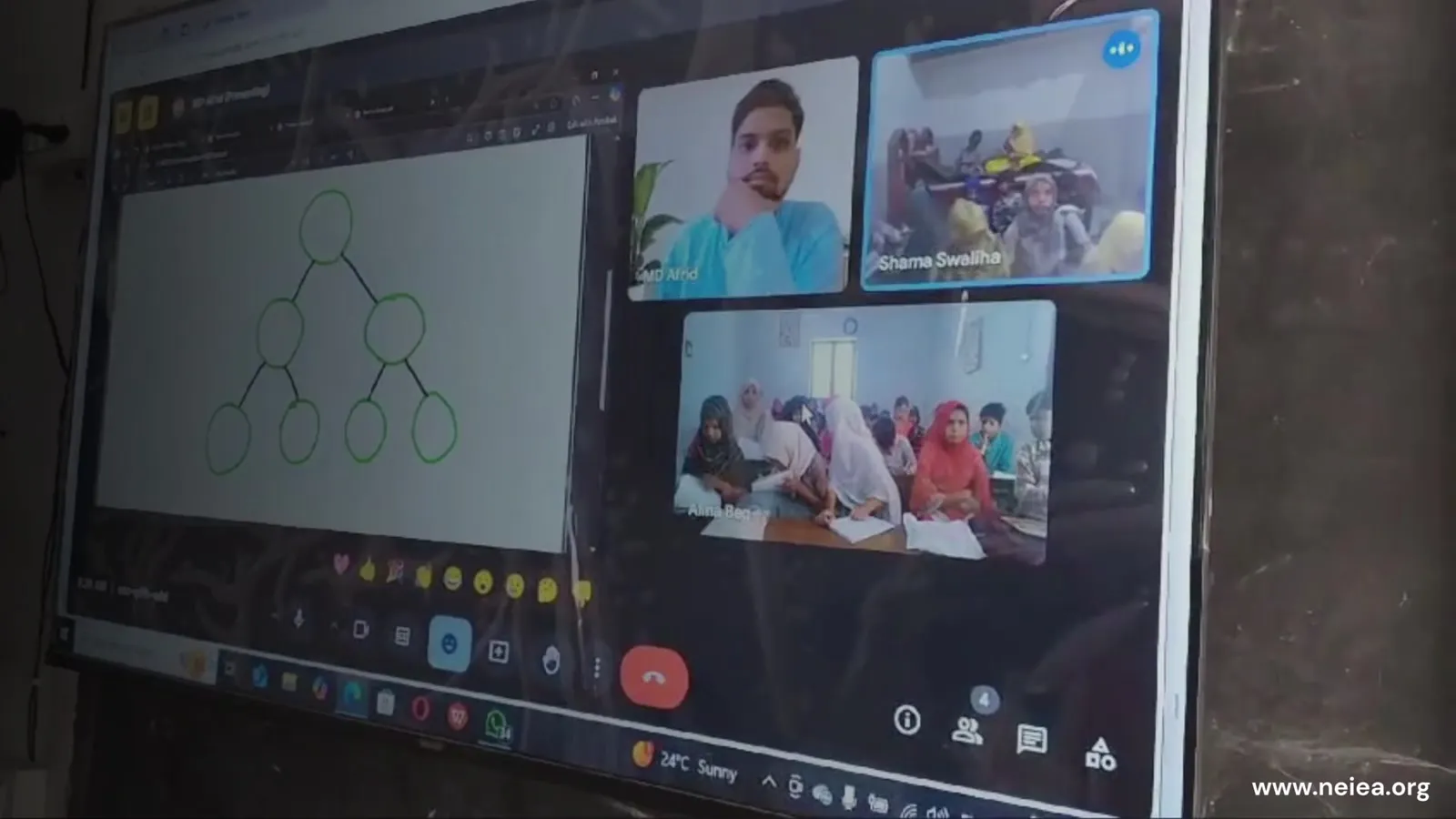
A trained mentor teacher teaches live on Google Meet. Partner schools, madrasas and community centres join on a big screen with a local coordinator in the room. Individual learners join on a phone. Everyone can ask and answer.
Mentor teacher: subject expert, trained in our pedagogy, teaching live every day.
Coordinator: a staff member from the partner institution in each room who supervises the class and keeps discipline while the mentor teaches.
Digital classroom: LED screen, laptop, webcam, microphone, broadband. About ₹1.3 lakh, once, converts any room.
Remote learners: any smartphone, 6 AM – 10 PM, seven days a week.
Parents: online meetings and progress reports, so families see the change.
Who Does What in a NEIEA Class
Expert Teachers, Our Technology and the DOP Method
The core of every NEIEA class is the mentor teacher we bring, live on screen and projected into several classrooms at once, teaching with Discourse-Oriented Pedagogy. Our academic team and office stand behind them, and a staff member in each room supervises and keeps discipline. Here is what each one does, and how a single class runs.
The Core of the Model
Expert Teachers + Our Technology + DOP
NEIEA brings the teacher, the technology that lets one teacher teach many classrooms at once, and a method that makes children think. Together they are what partners cannot easily build on their own, and what keeps the cost per child low.
1 Expert TeacherLive, teaching with DOPClassroomClassroomMadrasaClassroomAt Home
1
Expert Teachers NEIEA Brings
Every lesson is taught live by a subject expert that NEIEA recruits and trains.
English, Maths, Science and skills specialists
Trained in NEIEA's DOP method
The same quality teacher for a village madrasa as for a city school
2
One Teacher, Many Classrooms
NEIEA's technology and know-how project one live lesson into several classrooms at the same time.
Live on Google Meet, on a projector or big screen in every room
Learners at home join the same lesson on a phone
Timetables, attendance, assessments and reports built in
3
Discourse-Oriented Pedagogy
Our way of teaching: children learn by thinking, talking and creating, not by memorising.
Every lesson: Ask, Talk, Make, Reflect
Pioneered with Dr. K. N. Anandan
Assessed at the start, during and at the end of every course
Who Does What
The Heart of the ModelTeaches live, on screen
Mentor Teacher
A subject expert recruited and trained by NEIEA. The teacher is the heart of every class.
Teaches every lesson live, projected into each classroom
Teaches several partner classrooms at the same time
Leads every lesson with DOP: asks, discusses, checks understanding
Grades assessments and tracks each child's progress
Behind every lesson
Academic Team
Builds the connected DOP course that every classroom follows.
Lesson plans, worksheets and homework built around discussion
Initial, periodic and final assessments
Recruits and trains mentor teachers
Keeps every child followed up
NEIEA Office
Runs the system that keeps every classroom connected.
Registration, batches and timetables
Follow-up calls when a child stops coming
Reports for partners and certificates for learners
In each partner classroom
Classroom Coordinator
A staff member from the partner institution who supervises the room.
Switches on the projector, camera and microphone
Takes attendance
Keeps the class orderly and disciplined while the mentor teaches
One Class, Step by Step: Who Does What
Who
Before Class
1 · Ask
2 · Talk
3 · Make
4 · Reflect
After Class
Mentor TeacherOn screen, live
Opens the live class; lesson plan and worksheet ready
Starts with a real question, picture or situation
Calls on each classroom in turn and listens
Sets the task: a story, letter, dialogue, poster or solution
Shows the teacher's version and points out what to improve
Saves attendance, grades the work, plans the next lesson
Classroom CoordinatorSupervises the room
Switches on the projector and mic, seats children, takes attendance
Keeps the room quiet and every child facing the screen
Keeps groups on task and maintains discipline
Hands out worksheets when the mentor asks
Keeps order while groups share their work
Collects homework; reports absences to NEIEA
StudentsIn groups
Arrive, sit with their group, get the worksheet
Think first, then answer in their own words
Try it alone, then talk it through in pairs and groups
Write, solve or present together
Edit and improve; say what they learned
Homework; same time tomorrow
NEIEA SystemBehind the scenes
Today's classes and class lists on every teacher's screen
One live lesson on Google Meet: the same lesson in every partner classroom and on every phone
Attendance, scores and alerts: follow-up calls, partner reports, certificates
Before Class
Mentor TeacherOpens the live class; lesson plan and worksheet ready
Classroom CoordinatorSwitches on the projector and mic, seats children, takes attendance
StudentsArrive, sit with their group, get the worksheet
1 · Ask
Mentor TeacherStarts with a real question, picture or situation
Classroom CoordinatorKeeps the room quiet and every child facing the screen
StudentsThink first, then answer in their own words
2 · Talk
Mentor TeacherCalls on each classroom in turn and listens
Classroom CoordinatorKeeps groups on task and maintains discipline
StudentsTry it alone, then talk it through in pairs and groups
3 · Make
Mentor TeacherSets the task: a story, letter, dialogue, poster or solution
Classroom CoordinatorHands out worksheets when the mentor asks
StudentsWrite, solve or present together
4 · Reflect
Mentor TeacherShows the teacher's version and points out what to improve
Classroom CoordinatorKeeps order while groups share their work
StudentsEdit and improve; say what they learned
After Class
Mentor TeacherSaves attendance, grades the work, plans the next lesson
Classroom CoordinatorCollects homework; reports absences to NEIEA
StudentsHomework; same time tomorrow
The Teacher Is the Model
Every lesson is taught by a subject expert NEIEA recruits and trains. Partners don't have to find specialist English, Maths or Science teachers themselves.
Technology Multiplies Each Teacher
One live lesson reaches several classrooms and learners at home at once, so one great teacher does the work of many and the cost per child stays low.
DOP Makes It Real Learning
Children discuss, create and explain in every lesson, even through a screen. They understand the lesson instead of learning it by heart.
Simple for partners: you provide a room, a screen and a staff member to supervise the class. NEIEA brings the teacher, the course, the method and the technology.
How NEIEA is organised
One System, From Leadership to the Learner
Every class runs on the same structure: an academic team that builds connected knowledge, mentor teachers who teach it live, an office that keeps every student placed and followed up, and coordinators in the room.
LeadershipFounder, CEO & BoardMission, standards, partners and accountability
Academic TeamBuilds every lessonDOP lesson plans, worksheets, assessments; recruits and trains mentor teachers
NEIEA OfficeKeeps every child followed upRegistration, batches, timetables, follow-up calls, certificates
Mentor TeachersEnglish · Mathematics · Science departmentsSubject experts trained in DOP, led by department leaders. Each mentor teaches several live sessions a day.
18 mentor teachers
86 live sessions a day
170+ partner classrooms joining daily
One live lessone.g. English · OBE Level A, 9:30 AM, on Google Meet
Madrasa classroom
Coordinator 35 students
Big screen, camera and microphone · a local teacher runs the room
Government school
Coordinator 40 students
Big screen, camera and microphone · a local teacher runs the room
Community centre
Coordinator 25 students
Big screen, camera and microphone · a local teacher runs the room
Learners at home
On a phone
Join the same lesson; WhatsApp group for links and homework
Data flows back every day. Coordinators take attendance and mentors record scores. The Office calls absent children, the Academic Team improves the next lesson, and partners get regular reports.
Figures from NEIEA's timetable of 7 Nov 2026. Classroom sizes are examples.
2 · The pedagogy
Discourse-Oriented Pedagogy
Pioneered with Dr. K. N. Anandan, DOP replaces memorising with discourse: the teacher asks a real question, learners talk it through, make something with it, and reflect. Lesson plans, worksheets and homework are all built this way.
1
Ask Interaction
TeacherThe teacher sets up a real situation, a picture or a story and asks open questions.
ChildrenChildren think and answer in their own words. No answer is wrong yet.
2
Talk Try, then share
TeacherThe teacher gives a short task and waits.
ChildrenEach child tries alone first, then shares in pairs and groups, building on each other's ideas.
3
Make Create & present
TeacherThe teacher asks each group to produce something real.
ChildrenGroups write a story, a letter, a conversation, a poster or a worked solution, and present it.
4
Reflect Refine
TeacherThe teacher shares their own version and points out language, steps and ideas.
ChildrenChildren compare, edit and improve their work, and say what they learned.
What Changes in the Classroom
A Memorising ClassroomA NEIEA DOP Classroom
The teacher talks; children copy from the boardThe teacher asks; children talk, try and explain
Rules and answers are memorised for the examIdeas are built from what children already know
One right answer, given by the teacherMany attempts, improved together in groups
Children work alone and stay quietChildren share, discuss and present in every class
Forgotten after the examUsed again in new situations: real understanding
DOP was pioneered with Dr. K. N. Anandan. NEIEA uses it in English, Maths and Science, for children and adults, and trains every mentor teacher in it. 1,450+ educators trained so far.
The Principles Behind It
1
Start from what you already knowEvery learner walks in with language, number sense and life experience. Lessons build on it instead of ignoring it.
2
Fit the method to the learnerThe approach changes with the subject, the theme, the level and the person in front of the teacher.
3
Build systems of knowledgeNot isolated facts: connected ideas in language, maths and science that you can use again.
4
Strengthen the mind's own power to learnThe goal is a learner who can construct new knowledge, not just repeat old knowledge.
5
Borrow the best ideasCognitive psychology, linguistics, Gestalt, multiple intelligences, whole language, critical pedagogy.
6
For every ageThe same principles work for a seven-year-old and a fifty-nine-year-old, and we teach both.
3 · Who we teach
Six Communities, One Promise
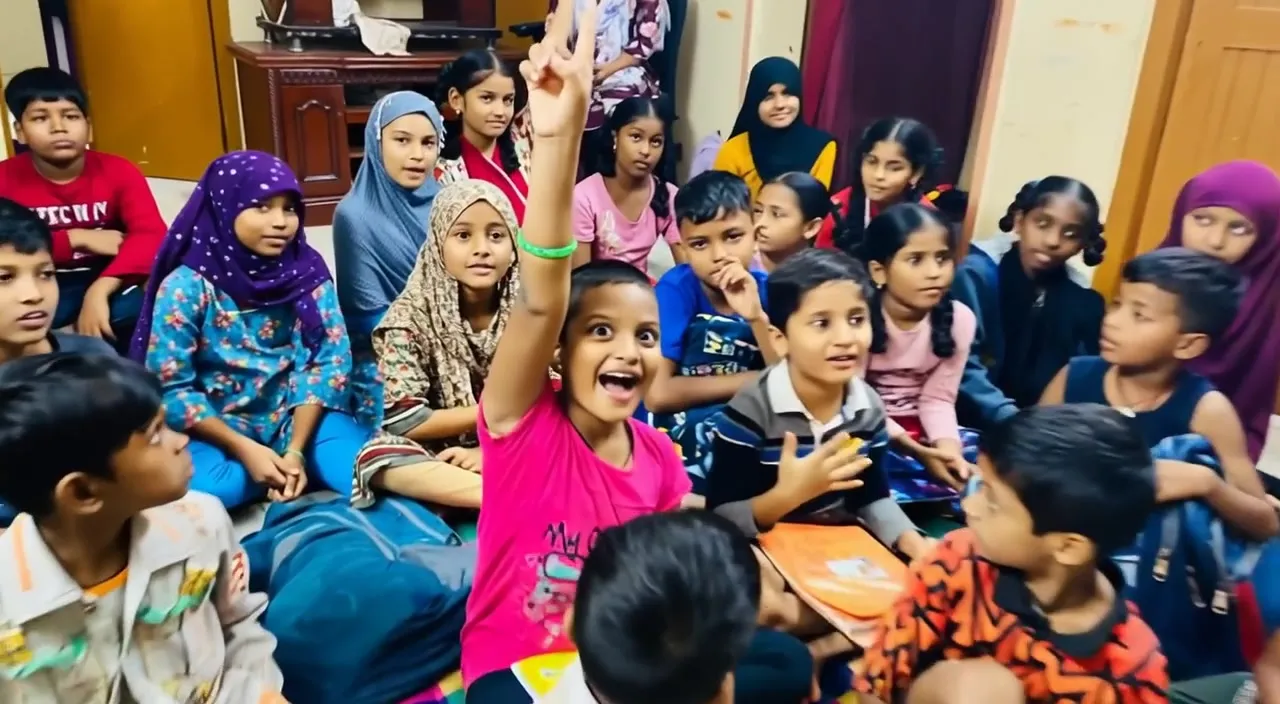
Children in Slums & Bastis
Through partners like Umeed in Aligarh, we run structured after-school English and Maths at community centres in slum neighbourhoods: games, storytelling and activity-based learning that make school feel like somewhere you want to be.
Girls' Education
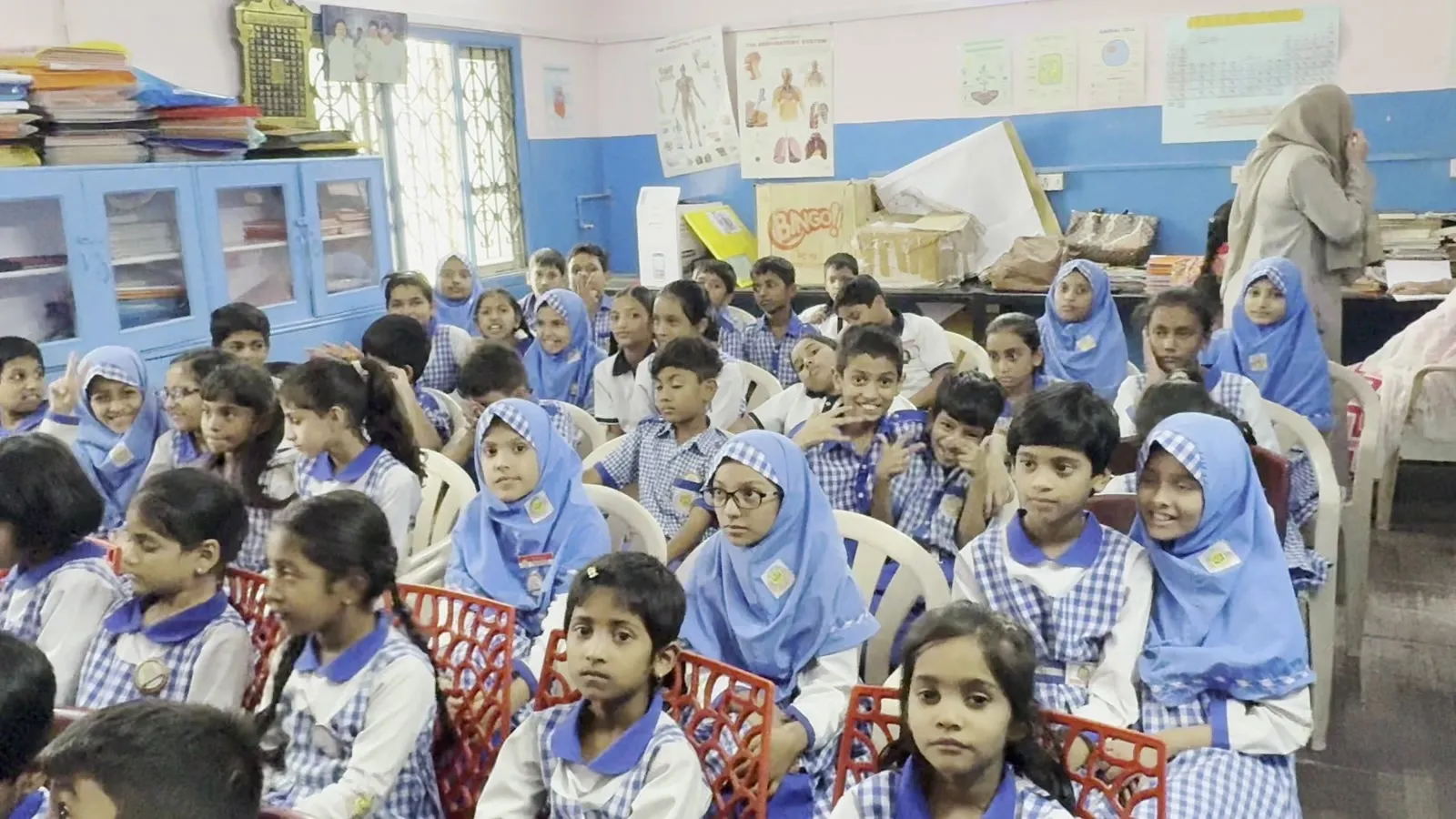
Girls are the majority in many of our classrooms. In Mewat we pair classes with family and community sessions so that a girl who starts a course is supported to finish it, through Class 10 and beyond.
Madrasa Students
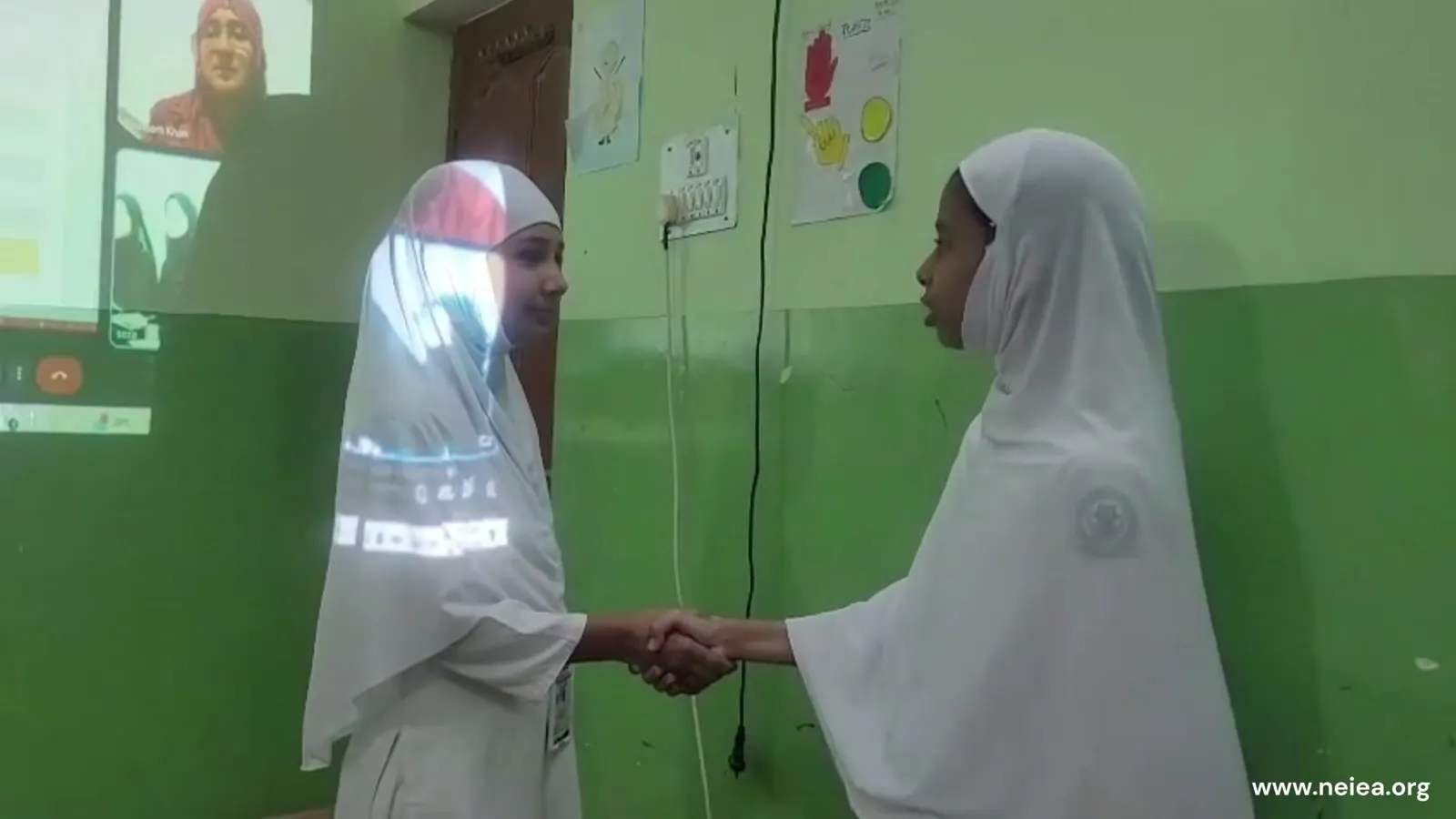
Our Madrasa Outreach team brings live English, Maths and Science into madrasas alongside religious studies, with the madrasa's own coordinator in the room, so students leave with both.
Out-of-School & Dropouts
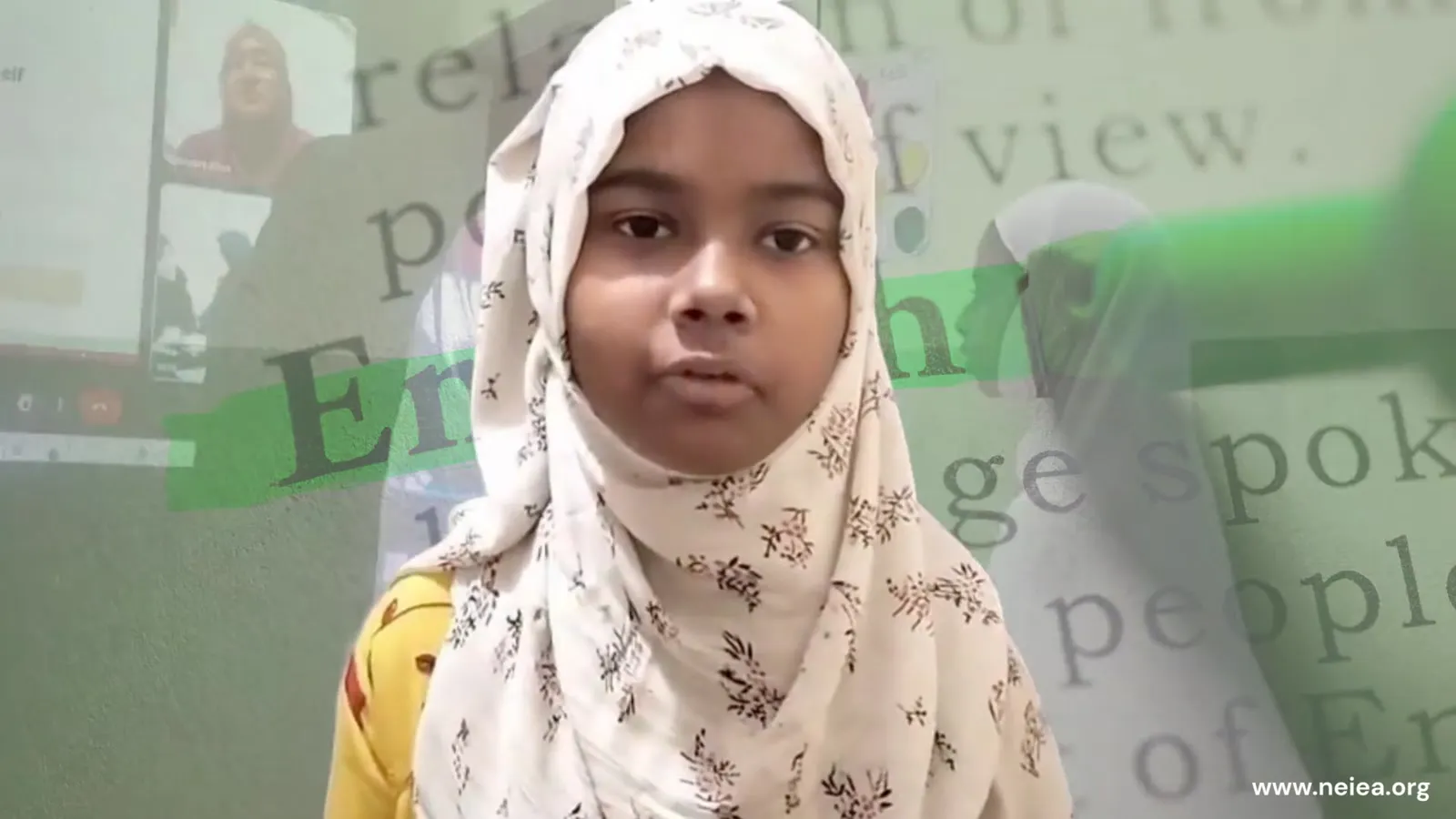
If you left school early, NIOS open schooling lets you start again at your level, Level A (Classes 1–3) up to the Class 10 secondary certificate, with our teachers guiding you through.
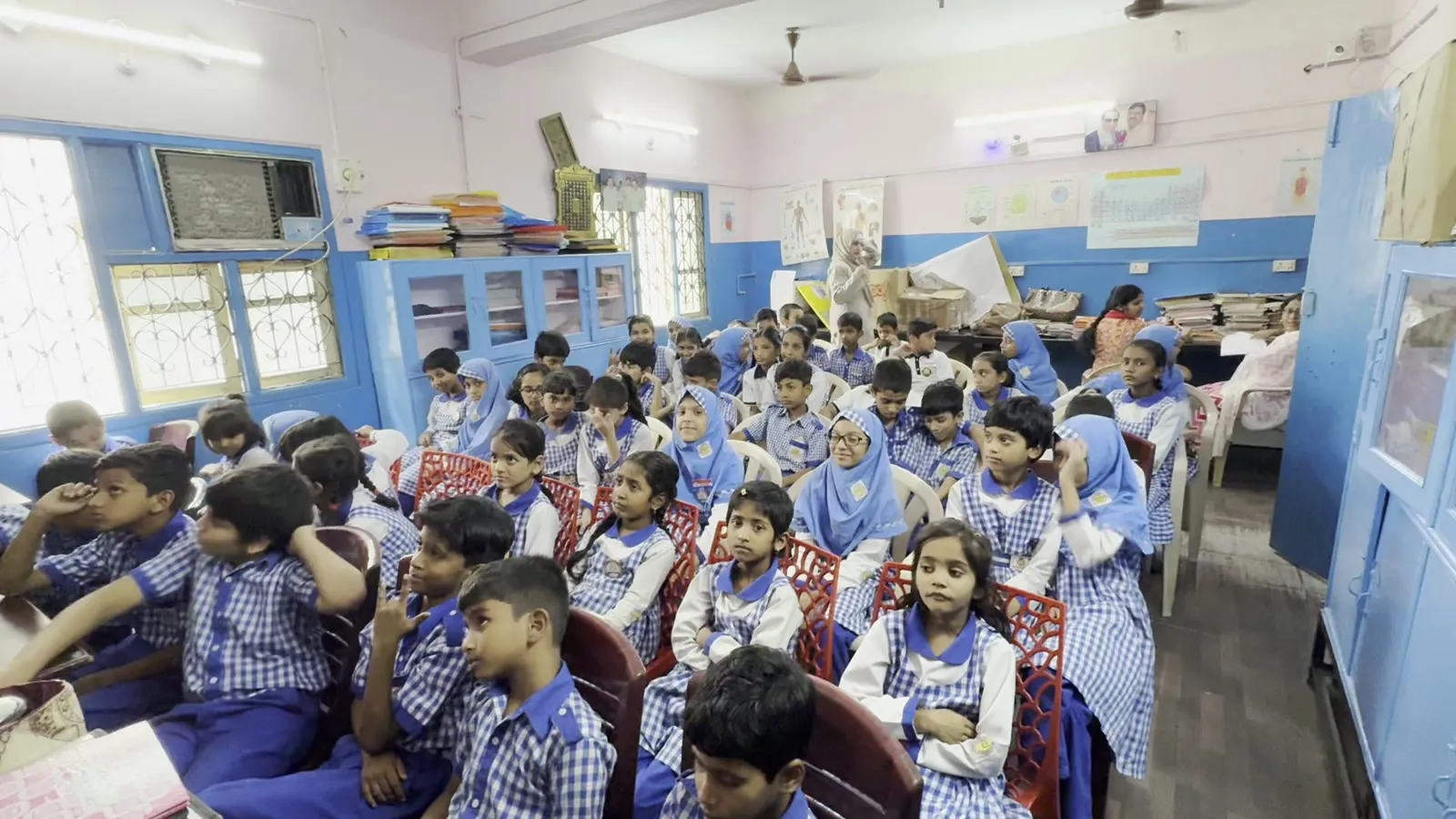
Government School Children
In government schools we run bridging courses that bring children up to grade level in English and Maths, and train their teachers in our method so the gains stay after we leave.
Adults & Working Youth
Evening batches between 7 and 10 PM are built for working youth and adults: a 59-year-old in Nagpur and a daily-wage worker in Hyderabad have both completed our English courses.
4 · The learner's path
From a First Class to a Certificate, and Beyond
FoundationsFoundational English · Elementary Science · NIOS Level A (Classes 1–3)
MiddleEnglish Beginner · Math & Science Middle School · NIOS Level B (Classes 4–5) · Upper Primary Maths
Live classes, free, for children with the most limited resources and unlimited potential across India.
₹100a month of one subject for a child
₹500a full month of live classes for a child
₹1.3 Lturns a room into a live digital classroom
Secure donation
Your Gift₹500/monthA full month of live classes for a child₹500 is a whole month with a real teacher, worth five months of a single subject: under ₹17 a day.


 Children in Slums & Bastis
 Girls' Education
 Madrasa Students
 Out-of-School & Dropouts
 Government School Children
 Adults & Working Youth